
NVIDIA


GeForce RTX 5090 vs Radeon RX 560X
Full comparison of specs, performance and benchmarks
AMD
Radeon RX 560X
Aggregate performance score
We've compared RTX 5090 and Radeon RX 560X across specs and all relevant benchmarks.
↗RTX 5090 outperforms Radeon RX 560X by ~213% on the catalog index; this is not a measured FPS gain.+213%
Scores are normalized on the Head to Head scale. Higher is better. How is this calculated?H2HBench Data Quality
Low confidenceSpecifications: Field verification not recordedVerified gaming results: 0Estimated / unverified results: 32Price record updated: Sep 6, 2026
Limited verified data
H2HBench Verdict
Higher catalog score: GeForce RTX 5090 (~84%)
The score difference is not a measured FPS improvement.
Reasons to consider RTX 5090
- Higher catalog performance index
- More graphics memory
- Recorded feature support: OpenCL 3.0, CUDA 12.0 · DLSS 4
Reasons to consider Radeon RX 560X
- Lower stated power consumption
- Higher catalog value index
- Recorded feature support: OpenCL 2.1 · AMD FidelityFX Super Resolution (FSR)
Catalog metrics radar
Axes with missing data are hidden; every value uses a fixed scale.
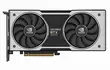 NVIDIA
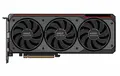 AMD
AMDPerformance
Efficiency
Price / performance
Memory capacity
10032
58100
3855
10056
Graphics card ranking
Positions 1–6of 321
Which should you choose?
Two practical conclusions based on community votes and gaming value.
GeForce RTX 5090
156 likesHead to Head visitors currently choose this model more often.
Overview
Scores are calculated from specifications, performance, and efficiency.
GamesDirectX, OpenCL, and Vulkan performance
100Better
32
Professional applications3D modeling, video editing, and rendering
78Better
29
AI and machine learningMachine-learning and AI capabilities
76Better
27
Power efficiencyPower consumption across workloads
58
100Better
Head to Head scoreOverall catalog score
79Better
43
Specifications
The better numeric value is highlighted in green, taking the metric direction into account.
HDMI
Device class
DirectX
Vulkan
OpenGL
Upscaling
Compute API
DisplayPort
Release date
Launch price——
Architecture
Recommended PSUBetter
LengthBetter
Thickness
Max monitors
Max resolution
Transistor countBetter
Die sizeBetter
Shader units / coresBetter
TFLOPSBetter
Power consumptionBetter
Memory type
Power connector
Base clockBetter
Clock speedBetter
Boost clockBetter
VRAMBetter
Memory frequencyBetter
Memory busBetter
Memory bandwidthBetter
Interface
Power consumptionBetter
Process nodeBetter
USB Type-C
Memory cacheBetter
Gaming FPS
Available results are shown separately; missing data is not treated as zero.
The Gaming FPS section compares RTX 5090 and Radeon RX 560X across curated H2H Lab game presets. The useful signal is not only average FPS, but also how each device behaves at 1440p and 4K, how memory capacity and bus width affect heavy textures, and whether the game engine favors raster performance, ray tracing, or driver maturity.
RTX 5090Radeon RX 560X
Verified externalEstimatedSources ↗

Counter-Strike 2
1080p High
416 FPS
162 FPS
1080p Ultra
288 FPS
112 FPS
1440p Ultra
215 FPS
62 FPS
4K Ultra
109 FPS
22 FPS
Counter-Strike 2RTX 5090416 FPSRadeon RX 560X162 FPSRTX 5090288 FPSRadeon RX 560X112 FPSRTX 5090215 FPSRadeon RX 560X62 FPSRTX 5090109 FPSRadeon RX 560X22 FPS
Cyberpunk 2077RTX 5090262 FPSRadeon RX 560X105 FPSRTX 5090234 FPSRadeon RX 560X89 FPSRTX 5090162 FPSRadeon RX 560X45 FPSRTX 509078 FPSRadeon RX 560X15 FPS
Forza Horizon 5RTX 5090324 FPSRadeon RX 560X132 FPSRTX 5090221 FPSRadeon RX 560X84 FPSRTX 5090196 FPSRadeon RX 560X56 FPSRTX 5090150 FPSRadeon RX 560X32 FPS
Hogwarts LegacyRTX 5090214 FPSRadeon RX 560X85 FPSRTX 5090179 FPSRadeon RX 560X70 FPSRTX 5090143 FPSRadeon RX 560X40 FPSRTX 509084 FPSRadeon RX 560X15 FPS
H2H workload indices
Comparable internal indices on a fixed 0–100 scale.
H2H Raster IndexH2H Index / 10010032103%
H2H Compute IndexH2H Index / 100973790%
H2H Rendering IndexH2H Index / 1001003988%
H2H Memory Workload IndexH2H Index / 1001005656%
H2H Efficiency IndexH2H Index / 1005810053%
These are versioned H2H calculated indices derived from normalized catalog data. They are not results from a third-party benchmark.
H2H AI workload indices
Estimated workload profiles based on available performance and memory data.
H2H Image Generation IndexH2H Index / 1001004380%
H2H ML Training IndexH2H Index / 1001004184%
H2H Inference IndexH2H Index / 1001003988%
H2H Local LLM IndexH2H Index / 1001004576%
H2H Computer Vision IndexH2H Index / 1001003988%
These are versioned H2H calculated indices derived from normalized catalog data. They are not results from a third-party benchmark.
Graphics APIs, SDKs and upscaling
DirectX12.212.0
Vulkan1.41.3
OpenGL4.64.6
UpscalingDLSS 4AMD FidelityFX Super Resolution (FSR)
Compute APIOpenCL 3.0, CUDA 12.0OpenCL 2.1
Architecture and release
ArchitectureBlackwell 2.0Polaris
Process node4 nmBetter14 nm
Release date20252018
Device classDesktopMobile
GPU cores, die and clocks
Transistor count92.2 billionBetter3000 million
Die size750 mm²123 mm²Better
Shader units / cores21760Better1024
Base clock2017 MHzBetter1175 MHz
Boost clock2407 MHzBetter1275 MHz
Board size, power and compatibility
InterfacePCIe 5x16PCIe 3.0 x8
Length304 mm170 mmBetter
ThicknessDual-slotDual-slot
Recommended PSU950 W250 WBetter
Power connector16 pinNone
Display outputs and limits
HDMIHDMI 2.1bHDMI 2.0b
DisplayPortDisplayPort 2.1bDisplayPort 1.4a
USB Type-CNoNo
Max monitors43
Max resolution7680 × 43207680 × 4320
Memory and compute throughput
VRAM32 GB GDDR7Better4 GB GDDR5
Memory typeGDDR7GDDR5
Memory bus512 bitBetter128 bit
TFLOPS104.8Better2.611
Other comparisons
 Arc B580Intel
Reviews and questions
Explain this comparison
Beyond percentages: causes, relevant specifications, and practical impact behind every chart.
What AI will explain
Overall score, radar, FPS, synthetic tests, specifications, efficiency, and value.
Evidence details
Data coverage
- Verified gaming results
- 0
- Verified synthetic results
- 0
- Games with verified results
- 0
- Verified community results
- 0
- Estimated / unverified results
- 32
- Specifications
- 0 / 68
Calculated scores · How is this calculated?
Scores use the catalog model and may include estimated inputs. Open each score to see its origin and the methodology.
clamp(round(performance × 0.7 + (efficiency ?? 50) × 0.2 + (value is missing ? 0 : (value − 50) × 0.2)), 0, 100)Price evidence · View sources (4)
Verified community results
No verified community benchmarks yet.
Reviewed by
No individual editorial review is recorded for this comparison.
Comparison history
Show recorded changes (2)
- · Record updated: products
- · Record updated: products
Why you can trust this comparison
Origin and confidence are evaluated from the evidence attached to each value. Unverified results are identified, and specification, benchmark and price dates remain separate.
Owner experiences
Real builds, results, and community feedback.
Moderator reviewedHelpful to the communityExpert badges
Frequently asked comparison questions
Short recommendations based on performance, memory, power consumption, and intended use.
01Which is better for gaming: RTX 5090 or Radeon RX 560X?+
RTX 5090 has the higher overall gaming score, while Radeon RX 560X offers the better price-to-performance ratio. The final choice depends on resolution and settings.
02Which is better for streaming?+
RTX 5090 is the stronger streaming choice thanks to performance, hardware encoding, and application support. Check AV1, H.264, and HEVC support before buying.
03Which is better for Blender?+
RTX 5090 is generally the better option for Blender and GPU rendering. Rendering-engine support and available VRAM also matter.
04Which is better for video editing?+
RTX 5090 offers more overall performance, while RTX 5090 offers more memory headroom. Codecs, hardware encoders, and editor optimization can change the result.
05Which is better for neural networks and AI?+
RTX 5090 is the more practical option for local AI workloads. VRAM capacity, compute libraries, and framework compatibility are especially important.
06Which is better for 1080p?+
Radeon RX 560X is the most rational 1080p choice, where high frame rates and cost per frame matter most.
07Which is better for 1440p?+
RTX 5090 leads in combined 1440p performance. RTX 5090 can be preferable for heavy textures and games with high VRAM usage.
08Which is better for 4K?+
RTX 5090 is preferable for 4K, where total performance, memory bandwidth, and VRAM capacity have the greatest impact.
09Which is better for a quiet PC?+
Radeon RX 560X is easier to use in a quiet build because of its lower estimated power and thermal load. Actual noise depends on the specific cooler.
10Which is better without replacing the power supply?+
Radeon RX 560X is the safer candidate because its stated power consumption is lower. Verify PSU wattage, age, and power connectors.
11Is it worth upgrading from the previous generation?+
Consider upgrading to RTX 5090 if your current device no longer delivers the required FPS, memory capacity, or feature support. A gain below 15–20% is usually worth waiting for a price cut.