
NVIDIA

GeForce RTX 5060 Ti 8GB vs Radeon VII
Vollständiger Vergleich von Spezifikationen, Leistung und Benchmarks
AMD
VII
Aggregierter Leistungswert
Wir haben RTX 5060 Ti 8GB und VII nach Spezifikationen und relevanten Tests verglichen.
↗RTX 5060 Ti 8GB ist nach dem aggregierten Head-to-Head-Index 2% schneller als VII.+2%
Die Werte sind auf der Head-to-Head-Skala normalisiert. Höher ist besser.GeForce RTX 5060 Ti 8GB vs Radeon VII: wichtigste Erkenntnis
Der Vergleich von RTX 5060 Ti 8GB und VII zeigt einen Vorteil von 2% für RTX 5060 Ti 8GB bei «Spieleleistung», während VII bei «Preis-Leistung» stärker sein kann. Unten siehst du, ob der Abstand aus FPS, Daten, Effizienz, Preis oder Plattform entsteht.
ZUSAMMENFASSUNG
Radar verifizierter Kennzahlen
Achsen ohne Daten werden ausgeblendet; jeder Wert nutzt eine feste Skala.
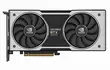 NVIDIA
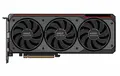 AMD
AMDLeistung
Effizienz
Preis / Leistung
Speicherkapazität
5352
9859
90100
6888
VERGLEICHSERGEBNIS
RTX 5060 Ti 8GB ist die beste Gesamtwahl
RTX 5060 Ti 8GB führt bei der kombinierten Spieleleistung. VII bietet den besseren Preis pro Frame; die endgültige Wahl hängt von Funktionen, Speicher und Spielen ab.
RTX 5060 Ti 8GB führt im kombinierten Leistungsindex
VII kostet weniger
KATALOGPOSITION
Vollständiges Ranking →Grafikkarten-Ranking
Positionen 32–37von 319
VERGLEICHSURTEIL
Welche solltest du wählen?
Zwei praktische Schlussfolgerungen aus Community-Stimmen und Gaming-Wert.
Radeon VII
121 LikesHead-to-Head-Besucher wählen dieses Modell derzeit häufiger.
Radeon VII
100/100 · Preis $399Die Wahl basiert auf dem Preis-Leistungs-Index und dem Einführungspreis.
GESAMTWERTUNG
Übersicht
Scores are calculated from specifications, performance, and efficiency.
Der Abschnitt «Zusammenfassung» vergleicht RTX 5060 Ti 8GB und VII mit normalisierten H2H-Daten und übersetzt Spezifikationen, Tests und Wert in praktische Kaufhilfe.
SpieleLeistung in DirectX, OpenCL und Vulkan
53Besser
52
Professionelle Anwendungen3D-Modellierung, Videobearbeitung und Rendering
45Besser
44
KI und Machine LearningMachine-Learning- und KI-Fähigkeiten
42Besser
41
EnergieeffizienzStromverbrauch in verschiedenen Lasten
98Besser
59
Head-to-Head-WertungGesamtwertung des Katalogs
69Besser
63
VOLLSTÄNDIGER VERGLEICH
Spezifikationen
The better numeric value is highlighted in green, taking the metric direction into account.
Der Abschnitt «Spezifikationen» vergleicht RTX 5060 Ti 8GB und VII mit normalisierten H2H-Daten und übersetzt Spezifikationen, Tests und Wert in praktische Kaufhilfe.
DisplayPortDisplayPort 2.1bDisplayPort 1.4a
HDMIHDMI 2.1bHDMI 2.0b
Device classDesktopDesktop
UpscalingDLSS 4AMD FidelityFX Super Resolution (FSR)
DirectX12.212.1
Vulkan1.41.3
OpenGL4.64.6
TFLOPS23.7Besser13.44
Stromverbrauch180 WBesser295 W
SpeichertypGDDR7HBM2
Stromanschluss8 pin8+8 pin
Veröffentlichungsdatum20252019
ArchitekturBlackwell 2.0GCN 5.1Besser
DickeDual-slotDual-slot
Compute APIOpenCL 3.0, CUDA 12.0OpenCL 2.1
Einführungspreis$379Besser$399
Shader-Einheiten / Kerne4608Besser3840
Taktrate2407 - 2572 MHzBesser1400 - 1800 MHz
Basistakt2407 MHzBesser1400 MHz
Boost-Takt2572 MHzBesser1800 MHz
Videospeicher8 GB GDDR716 GB HBM2Besser
Speichertakt28 GHzBesser2 GHz
Speicherbus128 bit4096 bitBesser
Speicherbandbreite448 GB/s1024 GB/sBesser
SchnittstellePCIe 5x8PCIe 3x16
Stromverbrauch180 WBesser295 W
Fertigungsprozess4 nmBesser7 nm
Empfohlenes Netzteil450 WBesser600 W
Länge241 mmBesser280 mm
Die-Größe181 mm²Besser331 mm²
Speicher-CacheL1 128 KB, L2 32 MBL1 16 KB, L2 4 MB
Transistoranzahl21900 millionBesser13230 million
Max. Monitore44
Max. Auflösung7680 × 43207680 × 4320
USB Type-CNeinNein
GAME TEST BENCH
Gaming-FPS
Available results are shown separately; missing data is not treated as zero.
Der Gaming-FPS-Abschnitt vergleicht RTX 5060 Ti 8GB und VII über kuratierte H2H-Lab-Presets. Entscheidend ist nicht nur der Durchschnitts-FPS, sondern auch das Verhalten bei 1440p und 4K, der Einfluss von Speicher und Busbreite auf schwere Texturen, die 1%-Low-Stabilität und ob die Engine Rasterleistung, Raytracing oder Treiberreife bevorzugt.
RTX 5060 Ti 8GBVII
H2H verifiziertCommunity-verifiziertGeschätztPrognostiziert
Black Myth: Wukong
1080p High
28 FPSGeschätzt 66%
25 FPSGeschätzt 66%
1080p Ultra
24 FPSGeschätzt 66%
22 FPSGeschätzt 66%
1440p Ultra
18 FPSGeschätzt 66%
16 FPSGeschätzt 66%
4K Ultra
7 FPSGeschätzt 58%
9 FPSGeschätzt 66%
Black Myth: WukongRTX 5060 Ti 8GB28 FPSGeschätzt 66%VII25 FPSGeschätzt 66%RTX 5060 Ti 8GB24 FPSGeschätzt 66%VII22 FPSGeschätzt 66%RTX 5060 Ti 8GB18 FPSGeschätzt 66%VII16 FPSGeschätzt 66%RTX 5060 Ti 8GB7 FPSGeschätzt 58%VII9 FPSGeschätzt 66%
Call of Duty: WarzoneRTX 5060 Ti 8GB28 FPSGeschätzt 66%VII25 FPSGeschätzt 66%RTX 5060 Ti 8GB24 FPSGeschätzt 66%VII22 FPSGeschätzt 66%RTX 5060 Ti 8GB18 FPSGeschätzt 66%VII16 FPSGeschätzt 66%RTX 5060 Ti 8GB7 FPSGeschätzt 58%VII9 FPSGeschätzt 66%
Counter-Strike 2RTX 5060 Ti 8GB238 FPSGeschätzt 74%VII213 FPSGeschätzt 74%RTX 5060 Ti 8GB167 FPSGeschätzt 74%VII150 FPSGeschätzt 74%RTX 5060 Ti 8GB130 FPSGeschätzt 74%VII117 FPSGeschätzt 74%RTX 5060 Ti 8GB42 FPSGeschätzt 66%VII58 FPSGeschätzt 74%
Cyberpunk 2077RTX 5060 Ti 8GB153 FPSGeschätzt 74%VII138 FPSGeschätzt 74%RTX 5060 Ti 8GB132 FPSGeschätzt 74%VII119 FPSGeschätzt 74%RTX 5060 Ti 8GB94 FPSGeschätzt 74%VII85 FPSGeschätzt 74%RTX 5060 Ti 8GB28 FPSGeschätzt 66%VII39 FPSGeschätzt 74%
Forza Horizon 5RTX 5060 Ti 8GB193 FPSGeschätzt 80%VII174 FPSGeschätzt 80%RTX 5060 Ti 8GB125 FPSGeschätzt 74%VII112 FPSGeschätzt 74%RTX 5060 Ti 8GB117 FPSGeschätzt 74%VII105 FPSGeschätzt 74%RTX 5060 Ti 8GB61 FPSGeschätzt 66%VII85 FPSGeschätzt 74%
God of War RagnarökRTX 5060 Ti 8GB28 FPSGeschätzt 66%VII25 FPSGeschätzt 66%RTX 5060 Ti 8GB24 FPSGeschätzt 66%VII22 FPSGeschätzt 66%RTX 5060 Ti 8GB18 FPSGeschätzt 66%VII16 FPSGeschätzt 66%RTX 5060 Ti 8GB7 FPSGeschätzt 58%VII9 FPSGeschätzt 66%
Hogwarts LegacyRTX 5060 Ti 8GB125 FPSGeschätzt 74%VII112 FPSGeschätzt 74%RTX 5060 Ti 8GB105 FPSGeschätzt 74%VII94 FPSGeschätzt 74%RTX 5060 Ti 8GB84 FPSGeschätzt 74%VII76 FPSGeschätzt 74%RTX 5060 Ti 8GB28 FPSGeschätzt 66%VII40 FPSGeschätzt 74%
Microsoft Flight Simulator 2024RTX 5060 Ti 8GB28 FPSGeschätzt 66%VII25 FPSGeschätzt 66%RTX 5060 Ti 8GB24 FPSGeschätzt 66%VII22 FPSGeschätzt 66%RTX 5060 Ti 8GB18 FPSGeschätzt 66%VII16 FPSGeschätzt 66%RTX 5060 Ti 8GB7 FPSGeschätzt 58%VII9 FPSGeschätzt 66%
Monster Hunter WildsRTX 5060 Ti 8GB28 FPSGeschätzt 66%VII25 FPSGeschätzt 66%RTX 5060 Ti 8GB24 FPSGeschätzt 66%VII22 FPSGeschätzt 66%RTX 5060 Ti 8GB18 FPSGeschätzt 66%VII16 FPSGeschätzt 66%RTX 5060 Ti 8GB7 FPSGeschätzt 58%VII9 FPSGeschätzt 66%
StarfieldRTX 5060 Ti 8GB28 FPSGeschätzt 66%VII25 FPSGeschätzt 66%RTX 5060 Ti 8GB24 FPSGeschätzt 66%VII22 FPSGeschätzt 66%RTX 5060 Ti 8GB18 FPSGeschätzt 66%VII16 FPSGeschätzt 66%RTX 5060 Ti 8GB7 FPSGeschätzt 58%VII9 FPSGeschätzt 66%
HEAD TO HEAD · BERECHNETER INDEX
H2H-Workload-Indizes
Vergleichbare interne Indizes auf fester 0–100-Skala.
Der Abschnitt «Benchmarks» vergleicht RTX 5060 Ti 8GB und VII mit normalisierten H2H-Daten und übersetzt Spezifikationen, Tests und Wert in praktische Kaufhilfe.
H2H Raster IndexH2H Index / 10053522%
H2H Compute IndexH2H Index / 10060592%
H2H Rendering IndexH2H Index / 10057628%
H2H Memory Workload IndexH2H Index / 100688826%
H2H Efficiency IndexH2H Index / 100985950%
Versionierte H2H-Indizes aus normalisierten Katalogdaten; keine Ergebnisse externer Benchmarks.
HEAD TO HEAD · BERECHNETER INDEX
H2H-KI-Workload-Indizes
Geschätzte Profile aus verfügbarer Leistung und Speicherdaten.
Der Abschnitt «Detailvergleich» vergleicht RTX 5060 Ti 8GB und VII mit normalisierten H2H-Daten und übersetzt Spezifikationen, Tests und Wert in praktische Kaufhilfe.
H2H Image Generation IndexH2H Index / 100606813%
H2H ML Training IndexH2H Index / 100596611%
H2H Inference IndexH2H Index / 10057628%
H2H Local LLM IndexH2H Index / 100617217%
H2H Computer Vision IndexH2H Index / 10058638%
Versionierte H2H-Indizes aus normalisierten Katalogdaten; keine Ergebnisse externer Benchmarks.
Grafik-APIs, SDKs und Upscaling
Der Abschnitt «Grafik-APIs, SDKs und Upscaling» vergleicht RTX 5060 Ti 8GB und VII mit normalisierten H2H-Daten und übersetzt Spezifikationen, Tests und Wert in praktische Kaufhilfe.
DirectX12.212.1
Vulkan1.41.3
OpenGL4.64.6
UpscalingDLSS 4AMD FidelityFX Super Resolution (FSR)
Compute APIOpenCL 3.0, CUDA 12.0OpenCL 2.1
Architektur und Release
Der Abschnitt «Architektur und Release» vergleicht RTX 5060 Ti 8GB und VII mit normalisierten H2H-Daten und übersetzt Spezifikationen, Tests und Wert in praktische Kaufhilfe.
ArchitekturBlackwell 2.0GCN 5.1Besser
Fertigungsprozess4 nmBesser7 nm
Veröffentlichungsdatum20252019
Device classDesktopDesktop
GPU-Kerne, Die und Taktraten
Der Abschnitt «Kerne und Taktraten» vergleicht RTX 5060 Ti 8GB und VII mit normalisierten H2H-Daten und übersetzt Spezifikationen, Tests und Wert in praktische Kaufhilfe.
Transistoranzahl21900 millionBesser13230 million
Die-Größe181 mm²Besser331 mm²
Shader-Einheiten / Kerne4608Besser3840
Basistakt2407 MHzBesser1400 MHz
Boost-Takt2572 MHzBesser1800 MHz
Boardgröße, Strom und Kompatibilität
Der Abschnitt «Formfaktor und Kompatibilität» vergleicht RTX 5060 Ti 8GB und VII mit normalisierten H2H-Daten und übersetzt Spezifikationen, Tests und Wert in praktische Kaufhilfe.
SchnittstellePCIe 5x8PCIe 3x16
Länge241 mmBesser280 mm
DickeDual-slotDual-slot
Empfohlenes Netzteil450 WBesser600 W
Stromanschluss8 pin8+8 pin
Display-Ausgänge und Limits
Der Abschnitt «Display-Ausgänge» vergleicht RTX 5060 Ti 8GB und VII mit normalisierten H2H-Daten und übersetzt Spezifikationen, Tests und Wert in praktische Kaufhilfe.
HDMIHDMI 2.1bHDMI 2.0b
DisplayPortDisplayPort 2.1bDisplayPort 1.4a
USB Type-CNeinNein
Max. Monitore44
Max. Auflösung7680 × 43207680 × 4320
Speicher und Rechendurchsatz
Der Abschnitt «VRAM und Bandbreite» vergleicht RTX 5060 Ti 8GB und VII mit normalisierten H2H-Daten und übersetzt Spezifikationen, Tests und Wert in praktische Kaufhilfe.
Videospeicher8 GB GDDR716 GB HBM2Besser
SpeichertypGDDR7HBM2
Speicherbus128 bit4096 bitBesser
TFLOPS23.7Besser13.44
HEAD TO HEAD · ENTDECKEN
6Weitere Vergleiche
 Arc A310Intel
Reviews and questions
KI-ERKLÄRUNG · HEAD TO HEAD
Diesen Vergleich erklären
Mehr als Prozentwerte: Ursachen, relevante Spezifikationen und praktische Auswirkungen hinter jedem Diagramm.
Was die KI erklärt
Gesamtscore, Radar, FPS, synthetische Tests, Spezifikationen, Effizienz und Wert.
ECHTE KONFIGURATIONEN
Erfahrungen von Besitzern
Echte Builds, Ergebnisse und Community-Feedback.
♢Von Moderation geprüft☆Hilfreich für die Community🏅Expertenabzeichen
Häufige Fragen zum Vergleich
Short recommendations based on performance, memory, power consumption, and intended use.
01Which is better for gaming: RTX 5060 Ti 8GB or VII?+
RTX 5060 Ti 8GB has the higher overall gaming score, while VII offers the better price-to-performance ratio. The final choice depends on resolution and settings.
02Which is better for streaming?+
RTX 5060 Ti 8GB is the stronger streaming choice thanks to performance, hardware encoding, and application support. Check AV1, H.264, and HEVC support before buying.
03Which is better for Blender?+
RTX 5060 Ti 8GB is generally the better option for Blender and GPU rendering. Rendering-engine support and available VRAM also matter.
04Which is better for video editing?+
RTX 5060 Ti 8GB offers more overall performance, while RTX 5060 Ti 8GB offers more memory headroom. Codecs, hardware encoders, and editor optimization can change the result.
05Which is better for neural networks and AI?+
RTX 5060 Ti 8GB is the more practical option for local AI workloads. VRAM capacity, compute libraries, and framework compatibility are especially important.
06Which is better for 1080p?+
VII is the most rational 1080p choice, where high frame rates and cost per frame matter most.
07Which is better for 1440p?+
RTX 5060 Ti 8GB leads in combined 1440p performance. RTX 5060 Ti 8GB can be preferable for heavy textures and games with high VRAM usage.
08Which is better for 4K?+
RTX 5060 Ti 8GB is preferable for 4K, where total performance, memory bandwidth, and VRAM capacity have the greatest impact.
09Which is better for a quiet PC?+
RTX 5060 Ti 8GB is easier to use in a quiet build because of its lower estimated power and thermal load. Actual noise depends on the specific cooler.
10Which is better without replacing the power supply?+
RTX 5060 Ti 8GB is the safer candidate because its stated power consumption is lower. Verify PSU wattage, age, and power connectors.
11Is it worth upgrading from the previous generation?+
Consider upgrading to RTX 5060 Ti 8GB if your current device no longer delivers the required FPS, memory capacity, or feature support. A gain below 15–20% is usually worth waiting for a price cut.